
Quentin Atkinson

Religiosity and political conservatism
Religion is frequently presented as integral to understanding conservative politics around the globe. In support of this view, countless studies have demonstrated an association between religiosity and conservative attitudes and values. Yet the nature of this relationship remains unclear. In this talk, I present a series of studies that show the association between religiosity and conservatism is both more complex and more variable than is often portrayed. This includes work examining a range of measures of religiosity and conservatism across a range of different cultural settings. I attempt to synthesise these findings to draw some general conclusions about how exactly religiosity is connected to conservatism, as well as what this means for our understanding of both religiosity and conservatism as psychological constructs.
Larisa Heiphetz Solomon
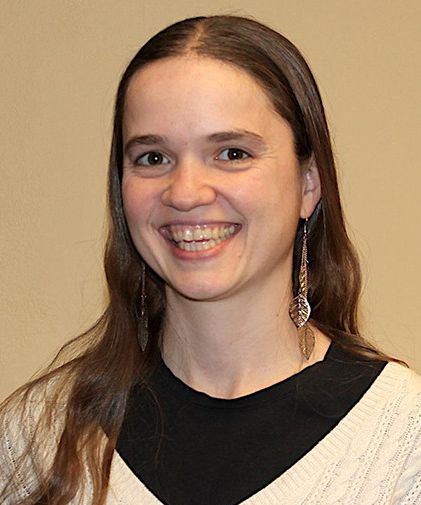
God Concepts Across Development
Developmental science has repeatedly shown that young children do not draw strong distinctions between their own mind and God’s mind and that adults are more likely than children to conceptualize God’s extraordinary mind differently from humans’ ordinary minds. Meanwhile, social psychology has demonstrated cases in which adults view human minds and God’s mind similarly. I bring these two literatures together to propose that God concepts change in two ways across development. First, greater theory of mind capacities allow adults, versus children, to draw stronger distinctions between human minds and God’s mind in many cases. Second, when adults do view these two types of minds similarly, they may do so for a different reason than children. Thus, a developmental perspective in useful not just
in examining similarities or differences across age but also in understanding consistency or change in the underlying mechanism. Such a perspective can also shed light on how shifting God concepts can affect cognition and behavior.
Will Gervais
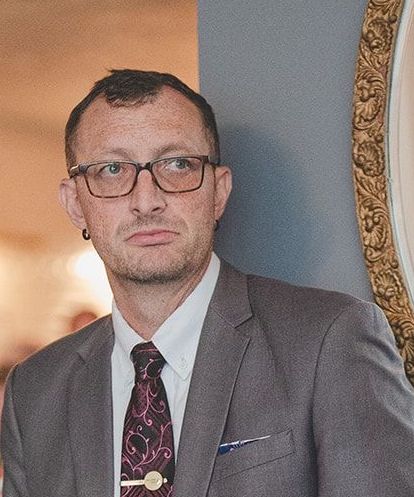
Belief in Belief and Hidden Heathens: What Self Reports Aren’t Telling Us About (Ir)Religious Cognition
Most folks on earth say they believe in a god of some sort — but many of them are concealing private religious doubts. Many atheists say they’ve got no need for religion — but many of them harbor subtle pro-religious intuitions that Dennet might call “belief in belief.” In this talk, I want to ask: What’s the deal? When (and why) do self-reports both over- and under-estimate religious commitment? And how do the answers to these questions impact our theorizing on the cognitive, cultural, and evolutionary bases of religious belief and disbelief? I don’t have the answers, but it’ll be fun, y’all.
Kathleen Corriveau

The Development of Cross-Cultural Religious Belief
Learning about religious cognition via first-hand experience can sometimes be time-consuming and costly. In this talk, I highlight the role of adult testimony as a mechanism for providing efficient and effective information transmission through focusing on insight from the Developing Belief Network: a cross-cultural global collaborative spanning 5 continents, 18 countries, and over 30 unique religious samples. By drawing on cross-cultural samples, I aim to highlight global universals as well as cultural-specific variability in the extent to which children attend to various testimonial features when acquiring religious belief. Such variability has broad implications for how religious information is acquired and then transmitted within and across generations.